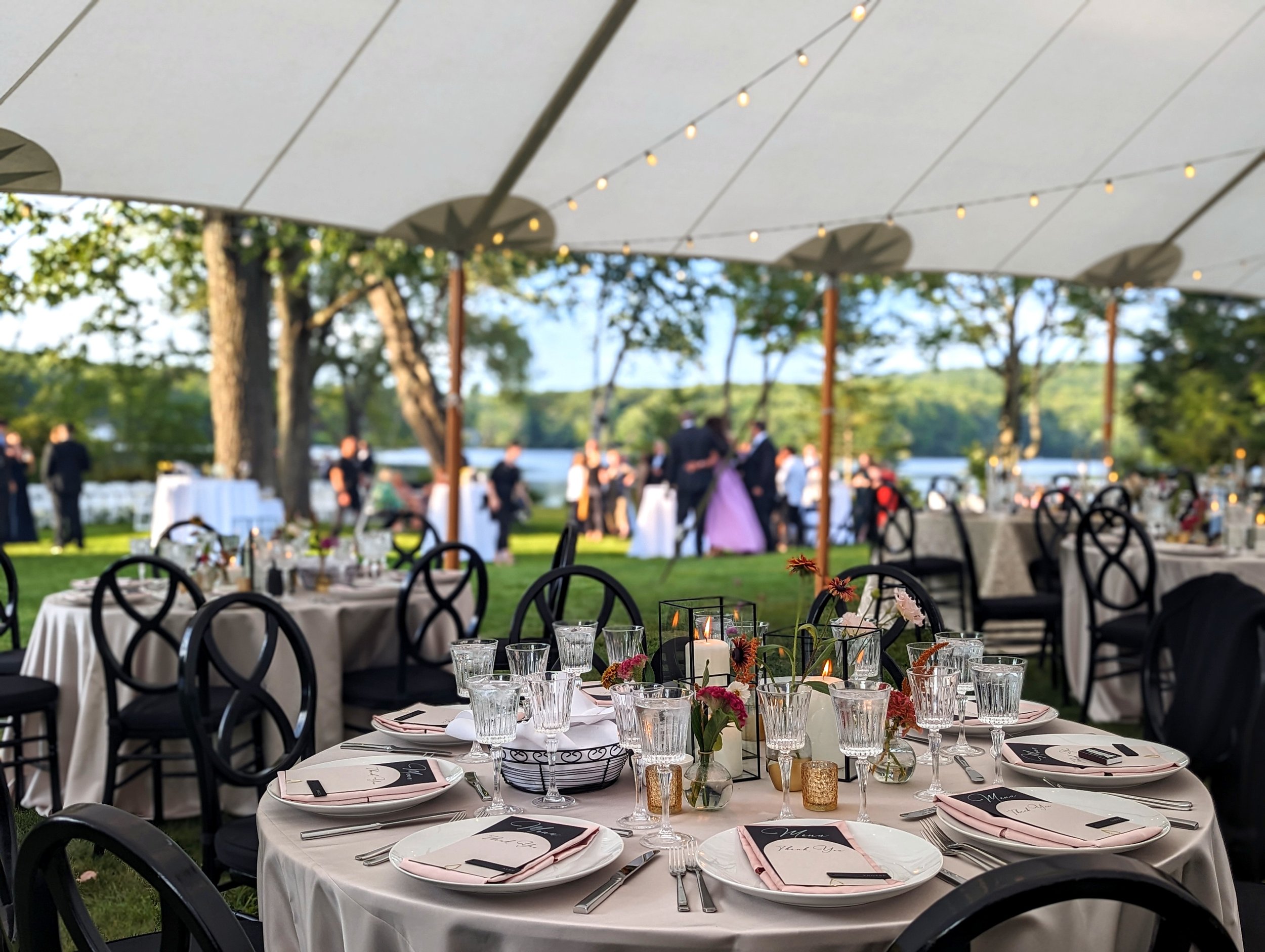
Farm-to-table is a phrase that has been thoroughly worn out. Here is what it actually looks like for a Vermont wedding when the catering team plans the menu around what is in season — with concrete dish ideas for every season we cater.
What we mean by farm-to-table in Vermont
We mean two specific things. First, the menu is built backwards from what is actually growing or being raised within driving distance the week of your wedding. Second, the dishes are cooked technique-forward — not piled with garnish to prove their provenance.
Vermont is uniquely suited to this approach because the farm density in the Connecticut River Valley is genuinely high. Within an hour of our Brattleboro kitchens we have access to pasture-raised beef, lamb, pork, and chicken; cellared root vegetables in winter; greens and asparagus in spring; an absurd peak of tomatoes and corn in summer; and the heritage squash, apples, and cider that define a Vermont fall.
Spring weddings — first greens and lamb
Spring Vermont weddings (May, June) are the moment for ramps, peas, asparagus, and pasture-raised lamb. A spring menu we love:
- Passed hors d'oeuvres: pea and mint crostini, asparagus and prosciutto bundles, smoked-trout deviled eggs
- First course: spring greens with chèvre, pickled rhubarb, and candied walnut
- Plated entrée: Vermont lamb with ramp pesto, fingerling potatoes, and roasted asparagus
- Vegetarian: spring vegetable risotto with peas, asparagus, ramps, and parmesan
- Dessert: strawberry-rhubarb galette with whipped Vermont cream
Summer weddings — tomatoes, corn, and the grill
Summer is heirloom tomatoes, sweet corn, stone fruit, and the wood fire. Tented weddings, lawn weddings, lake-house weddings — all of it benefits from a menu built around the season.
- Cocktail hour: heirloom tomato bruschetta, watermelon-feta skewers, local corn fritters with chipotle aioli
- First course: heirloom tomato salad with mozzarella di bufala and aged balsamic
- Family-style: cedar-plank salmon, herb-grilled chicken, summer succotash, grilled corn salad
- Vegetarian: heirloom tomato tart with herbed ricotta, basil, balsamic glaze
- Dessert: stone-fruit galette, blueberry buckle, honey-lavender panna cotta
Autumn weddings — the peak Vermont season
October Vermont is the busiest wedding month for a reason. The light is unbeatable, the foliage does its job, and the food is at its peak. For a fall wedding menu we lean into squash, root vegetables, slow-roasted meats, and warm spice — ending on apple-cider doughnut cake or maple panna cotta.
We have a dedicated fall wedding menu guide that goes deeper into autumn-specific menu directions if you are planning an October wedding.
Winter weddings — braises, fondue, and warmth
Winter Vermont weddings are smaller, more intimate, and more dramatic. Lean into braises, raclette and fondue stations, root vegetables, and warming desserts. A January wedding can absolutely be farm-to-table — the produce shifts to root cellar storage, and the proteins shift to long, slow Vermont braises.
- Beef short rib braised in red wine with root vegetables and gremolata
- Cider-brined pork loin with apple-fennel slaw and sage jus
- Wild mushroom pappardelle with brown butter and parmesan
- Raclette station with cellared potatoes, cornichons, and Vermont charcuterie
- Sticky toffee pudding with brown-butter ice cream
How we actually build a wedding menu
Here is the working order. We start with your season, your venue, and your service style. We pull the proteins, vegetables, and starches that make sense for that combination. We sketch the cocktail hour, the meal, and the dessert moment. We test the path with a tasting at our Brattleboro location. Then we lock the menu, source it, and build a service plan around it.
The menus that work best are the ones that pick a clear point of view and execute it tightly — not the ones that try to be everything at once.
Frequently Asked Questions
Can our menu accommodate vegan and gluten-free guests?
Always. Every wedding menu we build includes thoughtful vegan, vegetarian, and gluten-free options designed around the same seasonal sourcing — not as afterthoughts.
Do you only source from Vermont farms?
We source as locally as the season allows. In peak summer and fall, the menu can be 80%+ local. In winter, we lean on Vermont root cellars and proteins, with non-local items where they make sense (citrus, certain spices, seafood).
Related reading